


Guest of Honour
Professor Timothy TONG Wai-cheung, SBS, JP, Chairman of the Research Grants Council
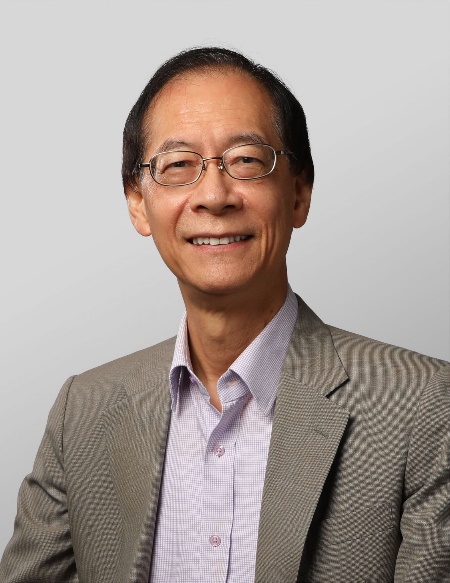 |
Professor Timothy W. Tong is a distinguished academic and engineer with over three decades of experience in teaching, research, and university leadership in both the U.S. and Hong Kong. Renowned for his expertise in heat transfer and commitment to sustainable energy, he served as President of The Hong Kong Polytechnic University (2009–2018) and Dean of Engineering at The George Washington University. Currently CEO of the AMTD Foundation, Professor Tong has held numerous influential public roles, including Chair of the Research Grant Council and the Hong Kong Laureate Forum. A fellow of several prestigious engineering societies, he is widely recognized for his contributions to education, engineering sciences, and public service. |
Keynote Speakers
| Speakers | Bio | Keynote topic and abstract |
Prof. Ping LI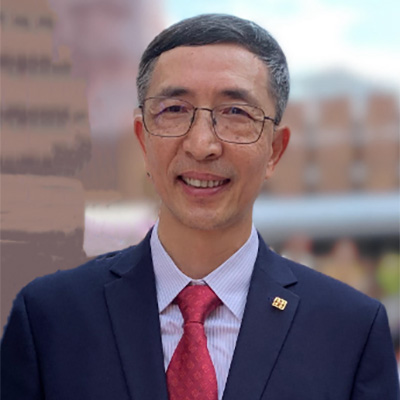 |
Ping Li is Sin Wai Kin Foundation Professor in Humanities and Technology, Chair Professor of Neurolinguistics and Bilingual Studies, and Dean of the Faculty of Humanities at the Hong Kong Polytechnic University. He was previously Professor of Psychology, Linguistics, and Information Sciences at the Pennsylvania State University, and served as Program Director of Cognitive Neuroscience and Perception, Action, and Cognition programs at the U.S. National Science Foundation. Li’s research is focused on investigating the neurocognitive and computational bases of language acquisition, bilingualism, and reading comprehension. He uses cognitive neuroscience approaches and emerging technologies to study the neuroplasticity and individual differences in both children and adults, aiming at understanding the relationships among language, culture, technology, and the brain. Li is currently Editor-in-Chief of Brain and Language and Senior Editor of Cognitive Science. He was President of the Society for Computation in Psychology, and is a Fellow of the American Association for the Advancement of Science, the Psychonomic Society, and the Cognitive Science Society. | Leveraging AI and Emerging Technologies for the Study of Language and Cognition: Challenges and Opportunities In an era of rapid developments in generative AI (genAI) and digital technology, many fields are facing significant challenges. This is no exception for the field of language studies. Therefore, we must understand and use the latest techniques and emerging technologies to examine the mechanisms underlying language learning, representation, and processing. For example, we can use neurocomputational methods to study individual differences in language processing; we can build immersive VR platforms that simulate the acquisition process and motivate learning in a real world-like natural but controlled environment; and we can study how human learners, compared with AI models, more efficiently integrate multimodal information in social contexts, and how such social interactive processes enable some to learn more effectively than others. To achieve these goals, we need to collect and use high-quality domain-specific data (unlike what genAI models do), linguistic and non-linguistic processing data, and real-time multi-sensory learning data. We can also leverage genAI to develop evidence-based, personalized, pedagogical designs for foreign language learning and representation. Theoretical and educational implications of our findings on language, reading, and the brain will be discussed in light of current technological and scientific developments. |
Prof. Jang Ho LEE
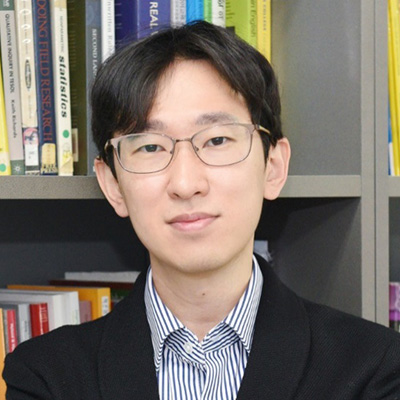 |
Jang Ho Lee received his DPhil in Education from the University of Oxford. He is currently a Professor in the Department of English Education and the Director of the Digital Education Support Center at Chung-Ang University, Republic of Korea. His work has been published in Applied Linguistics, ReCALL, Language Learning & Technology, The Modern Language Journal, Language Learning, Language Teaching Research, ELT Journal, TESOL Quarterly, Journal of Multilingual and Multicultural Development, System, Language Awareness, and others. His research interests include Al-based language teaching and learning, the bilingual approach to second language teaching, and individual learner differences in second language acquisition. | Empowering language teachers with GenAI: No-code approaches to developing language learning apps Advancements in no-code approaches that employ GenAI have enabled second language (L2) teaching practitioners to develop resources and tools without programming expertise. More recently, vibe coding has emerged within the language teaching and learning field. This approach allows instructors to create and refine customized apps by interacting with GenAI using natural language alone. These innovations hold significant promise for L2 instruction, as teachers can now independently develop resources such as chatbots for language practice, automated essay-scoring tools, and language exercise apps tailored to their specific needs, without relying on IT professionals. This speech introduces three currently available approaches for developing GenAI-mediated tools for L2 educators and discusses their respective merits and challenges. It also explores the pedagogical implications of employing such approaches, as well as concerns related to the use of GenAI in developing language learning resources. |
Prof. Thomas CHIU
 |
Thomas Chiu is an Associate Professor of AI and STEM Education at The Chinese University of Hong Kong. A globally recognised scholar, he is named a Stanford University Top 2% Most Cited Scientist. He provides significant editorial leadership as Editor-in-Chief of Interactive Learning Environments and Associate Editor for three leading journals. His expertise is sought internationally, reflected in visiting scholar appointments across various regions. He drives innovation through the development of professional development initiatives and curricula for AI education and AI applications for nurturing core skills. He regularly shares his expertise as a keynote and invited speaker at global academic and professional forums. | From Principles to Practice: A Cohesive Framework for Human-AI Collaboration in Education We stand at a pivotal crossroads in educational evolution, where AI’s potential is vast but its integration is often fragmented. This keynote synthesises a cohesive vision from Thomas’s four studies to chart a deliberate path forward. Thomas begins by establishing human-AI collaboration as our foundational principle, moving beyond automation to partnership. This requires a second pillar: cultivating responsible digital citizenship by weaving AI ethics across all disciplines. Third, he defines and develops AI literacy competencies for students and educators. Finally, he integrates these elements into the Intelligent-TPACK (I-TPACK) framework, providing educators with a practical model for pedagogical design. This talk argues that by logically connecting ethics, literacy, and collaborative pedagogy, we can transition from ad hoc AI use toward a transformative and responsible future for learning. |